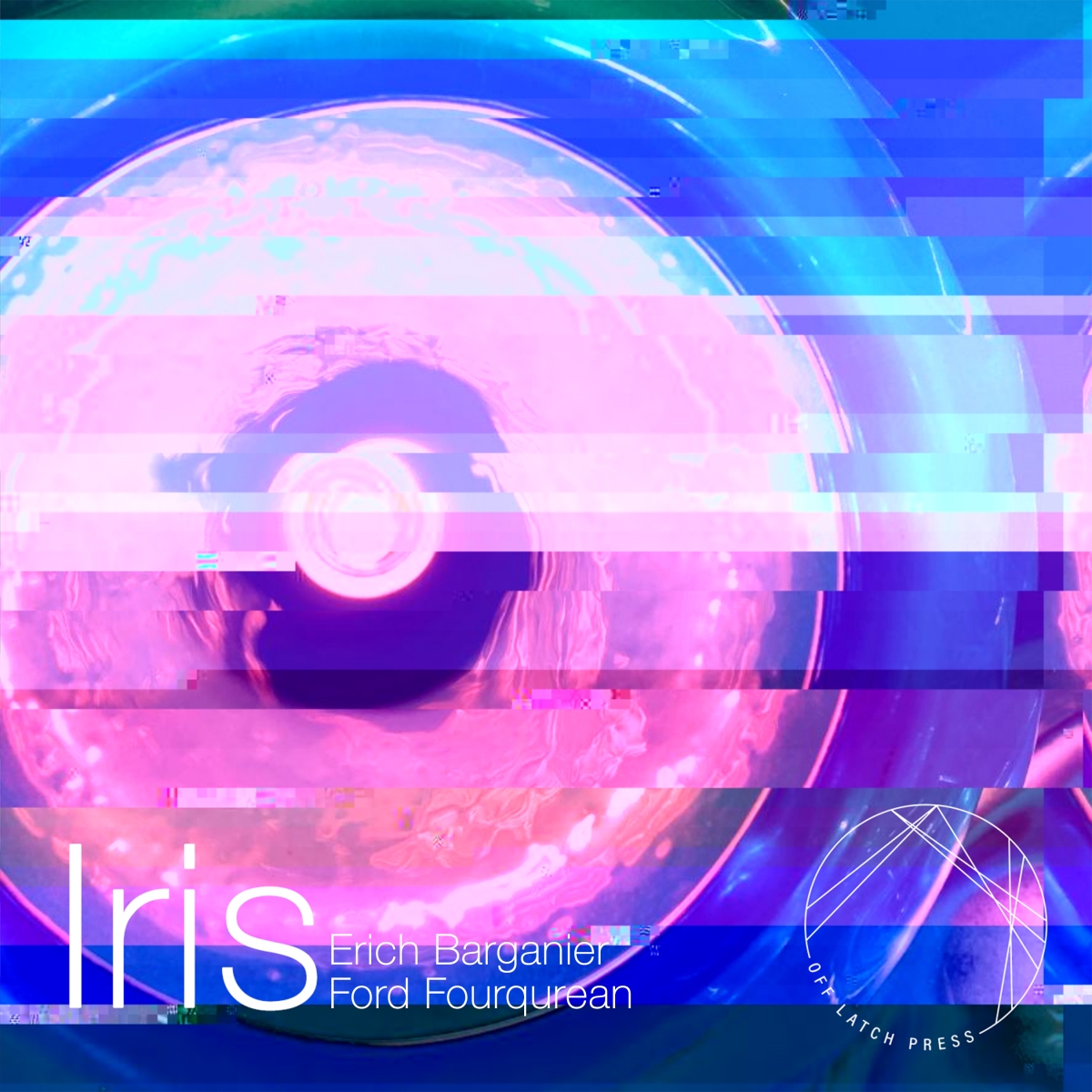
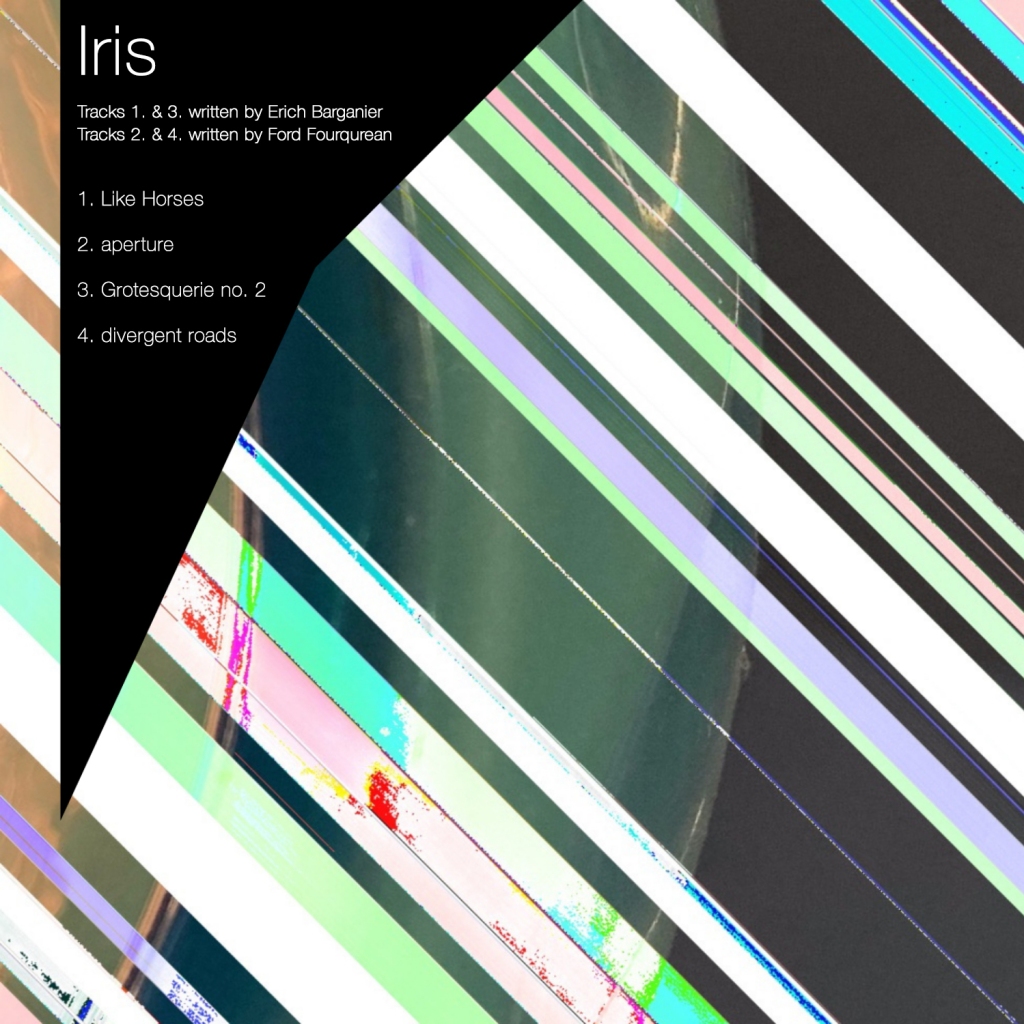
Iris, a new EP released Feb. 4 on Off Latch Press, features four newly composed electroacoustic tracks – for varying combinations of electric guitar, clarinet, and violin – by Ford Fourqurean and Erich Barganier. “Like Horses” and “Grotesquerie No. 2,” composed by Barganier, alternate in order with Fourqurean’s “aperture” and “divergent roads.” The album features Fourqurean on clarinet and Barganier on electric guitar and violin.
Exploring an indie-classical sound – a description Barganier shared – the collection of new music cracks open the classical mold. Electronic processes are implemented to curve and distort acoustic fragments—they reflect, magnify, and pull apart their musical matter. The resulting sounds seep into the texture like light as the music unfolds. In this way, the album forms a kaleidoscope of textural and timbral shifts in the electronic processing of acoustic instrumentals.
Its bookending tracks – Barganier’s “Like Horses” and Fourqurean’s “divergent roads” – conclude somewhat similarly. “Like Horses,” in particular, resolves in a cluster of electronically-produced sound, which clouds – until it nearly submerses – the track’s clarinet and guitar parts. “Grotesquerie No. 2” and “aperture,” composed by Barganier and Fourqurean, respectively, also share similarities. Contrasting the fluid, shifting sounds of the first and fourth tracks, these two, instead, embrace the silent space surrounding an isolated guitar on “aperture,” and a clarinet, alone, in “Grotesquerie.” Whereas the second and third tracks puncture rhythmically, and punctuate in a conversational way, the opening track ripples. The concluding track expands.
One of multiple features that make this EP so distinct is how the compositions started out in score form. Barganier and Fourqurean each fused, in individual ways, Western classical notation with elements such as guitar tablature and video—giving space for plenty of improvisation, as well. Novel approaches to musical notation made the blueprint for what became the album’s raw recording material.
A particularly strong focus on audio mixing and electronic processing forms a through line in Iris. As the composers explain, recording production and its transformation of each uniquely engraved score became an integral aspect of the music’s final form.
In this recent interview, Fourqurean and Barganier describe their collaboration on Iris, and their collaborative and independent approaches to electronics and composition heard on the EP. (This interview has been edited for length and clarity.)
Continue on to read the full conversation, below.
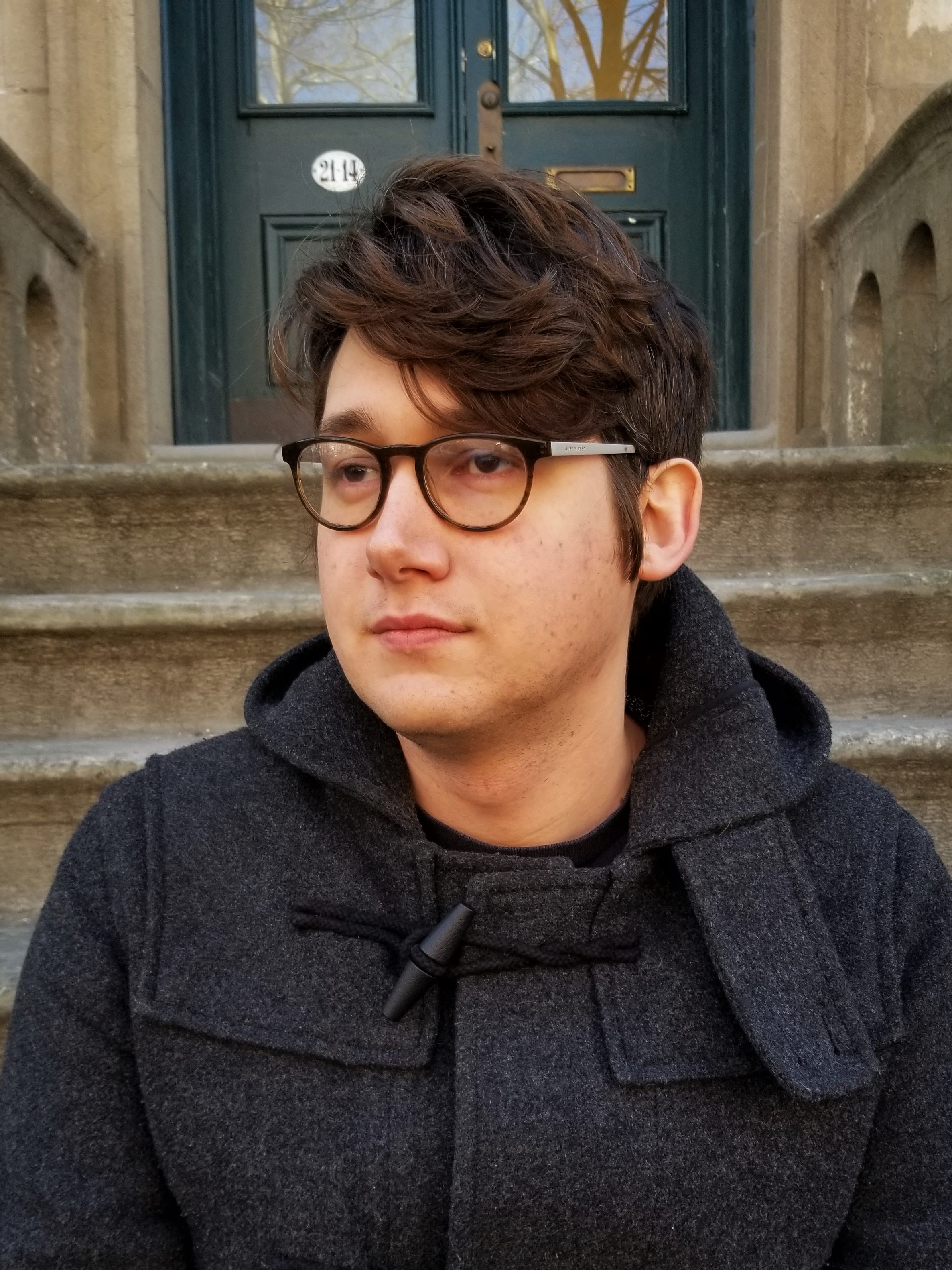
NATASHA NELSON: To start, would you each share a bit about yourselves for readers, and how you got started on your collaboration on this new EP?
ERICH BARGANIER: I met Ford at the Westben Performer-Composer Residency, in Canada. Typically, they invite about 20 composer-performers together to this artist residency where you go and write pieces together, and you perform your own work. This year, because of COVID, that didn’t happen. As a result, they decided to reformat what that residency was. They put everybody into groups, and everyone made these digital installation-performance videos. Ford and I were placed in a group together. I think Ford was actually one of the only people I knew by name a little bit out of the crowd, because I knew of his playing through Unheard-of//Ensemble. Never had met him before, though.
I really clicked with Ford, and after our project was over with the Westben residency, we thought this would be really cool to go and do on our terms in a smaller format, and with a lot more time. The residency was only three weeks long. We got together shortly after that, and we came up with the project. We thought it’d be really cool to write for each other and have more of a compositional end to it. That’s where the beginning of the EP came from. And, my own background: I’m a composer-performer. I do probably more composing than performing these days, so this was a nice chance to really get back into it.
And Erich, I read that you’re also a visual artist, is that right?
EB: Yeah—that’s one of the other things that Ford and I bonded over. We both were doing video work for this Westben project. In my case, I do a lot of datamoshing and glitch-based art, either in Audacity in still images, or corrupting video manually and reformatting it through a bunch of really old, random programs that probably shouldn’t be on the market anymore for consumers.
What’s glitch-based art?
EB: It’s a destructive form of art. There’s a bunch of different variations of it, but in the way that we exist right now, where everything is some kind of file, there are ways to go about distorting the data inside of it. But you don’t do it through code—you do it by putting it into places where it shouldn’t go, and then spitting it back out.
How about you, Ford? Do you focus on visual art, as well, in addition to music?
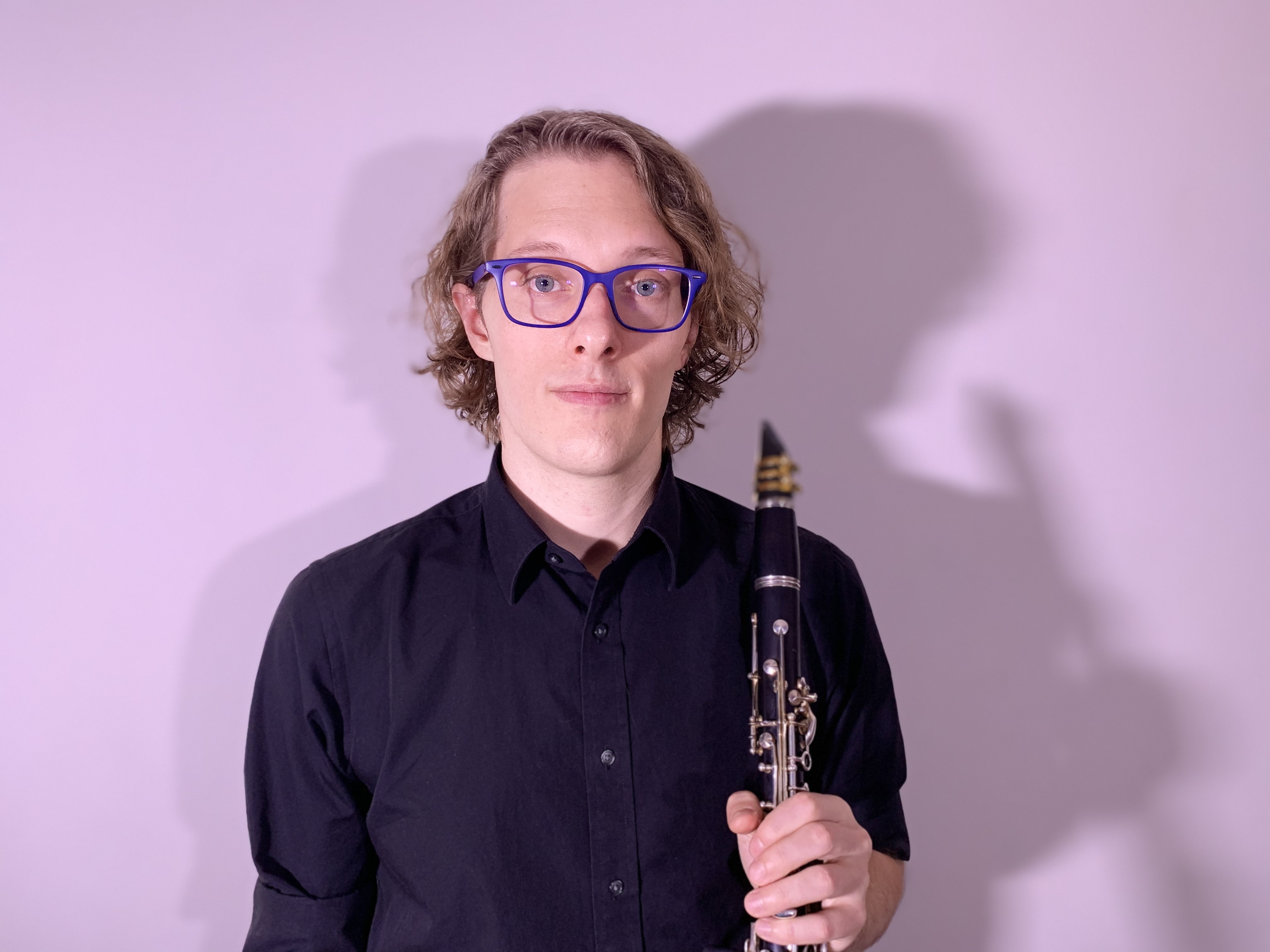
FORD FOURQUREAN: Professionally, I’m known as a clarinetist and I’ve been composing for years. At the start of the pandemic, when everything shut down, I was looking for ways to not feel creatively burned out and feel like I was actively trying to create something . . . produce something. I ended up diving into my composition and diving into working with video art.
I’ve been doing a lot of video art for my ensemble for a while, but outside of Unheard-of//Ensemble, I hadn’t really worked [on it] creatively. But there are all of these tutorials out there. I’ve been diving into tutorials on things like masking, how to overlay and collage images, and how to use different color effects, filters, and create different dynamic layers within certain bits of video. These are all things that I thought were really cool and I saw other people do pre-March 2020.
I probably would not have been able to come up with any of the work that I’ve been doing if I was sticking to the schedule, and the priorities, I had before the pandemic. Meeting Erich at Westben—this was a great opportunity. I come from the other side of this where I’m, mostly, working as a performer. This was a great opportunity for me to continue writing. And I haven’t actually had my own music put on an album before, so is a really cool experience for me.
That’s awesome! Since we’re on the topic of visual art, who created the album cover art for “Iris”?
FF: Both of us.
Let’s get into the EP’s music. Would you like to chat about the four individual tracks?
FF: I guess the easiest thing to do would be to talk about where we came from when we were composing for each other. We each wrote a duo, and we each wrote a solo. Maybe we can pick apart those two sides a little bit. Why don’t you go first, Erich?
EB: Yeah. I was going to say the same thing. We approached that from the angle of writing each other a solo piece, and then we were going to write a duo piece for both of us to play. The way that I first approached it was, I think I gave Ford some really heavy electronic tracks that weren’t very much fun, and they weren’t really working very well. So then we – at least from my end of things – had a talk about it. Ford was talking about it in relation to his tracks—he was saying “I want to use this to go try out some things and have fun with it.” I thought, “Why am I not doing that too? That should be the point of this.”
Up to this point, everything I was working on through 2020 was really serious music. Not that this isn’t serious, but there’s whimsy in this where there isn’t in some of my other pieces. So from my end of things, I wanted to explore that end. And, I like writing for people—so learning what Ford likes, what Ford doesn’t like, and what kind of fits within that was a big guide as to where I went with these pieces.
One of the things that I wanted to try out – which is something I think I gravitated specifically toward, working with Ford – was trying to do something in an indie-classical style. That’s not something I would normally write, but it’s something that Ford is really good at. The idea behind the first track, “Like Horses,” was: What if you had a NOW Ensemble track, but it’s now lo-fi and folk-inspired—and weird?
The solo clarinet piece, “Grotesquerie No. 2,” is a piece inspired by working with Ford in the beginning of this. I’m writing a series called Grotesqueries based in a notational style where it’s very gestural but there are no noteheads. This is one of the first pieces in the series. It’s very improvisatory. There are contours of notes, there are dynamics, but none of the notes are specified—there’s a heavy amount of improv that happens.
“I’m writing a series called Grotesqueries based in a notational style where it’s very gestural but there are no noteheads. This is one of the first pieces in the series. It’s very improvisatory. There are contours of notes, there are dynamics, but none of the notes are specified . . .”
Erich Barganier
On the whole, I really wanted a way to showcase Ford in that one, despite the element of composition. I wanted [it to be] a way to show off [his playing] without it being a typical, flourishing clarinet solo, where you have a bunch of runs and fast [passages]—something that would fit what I felt would really work for his style of playing.
From there, having that idea of these short, bagatelle-style pieces, is what these are based on—but they’re done in a very weird way. I’m dubbing them “Grotesqueries.” So this is, again, kind of in that same style: this is not necessarily “serious” music, but it’s still art music.
Are all four compositions on the EP notated uniquely?
EB: More or less, yeah.
And I take it this is the second piece in the Grotesqueries series?
EB: It’s the first one that’s been completed. I’m still working on the piano [selection]. There are two other ones coming out after this. There’s one that’s going to be for piano and vocals. There’s one that’s going to be for electric guitar.
Is the series primarily intended to be recorded?
EB: No—Ford has access to a device called a MUGIC, which is a gestural controller for his clarinet. The really nice thing about this particular piece, which I really like, is that the MUGIC clips onto the bell of the clarinet—then, based on where it exists in space, it actually does procedural actions and sends the data into (in this case) Ableton. The electronics that you hear in there are replicable in a live performance. Based on how Ford will move in these environments, he’ll be able to make it sound like that, too. These will all be able to work in a recording environment, or in a live environment.
FF: In terms of the way they’re notated and the way they’re laid out, they’re all meant to be performed live in some form. I’m not going to be able to one-to-one recreate what this sounds like ever again, really, unless I use the automations that I built in, in making a recorded mix of it. But the thing about the MUGIC is, it’s sort of like your own little chamber partner.
This was originally developed by violinist Mari Kimura. She worked with Earcomm and a bunch of other people in developing this hardware—this little Dorito-sized chip. It’s really flexible. It’s usable on Max/MSP or Ableton.
Speaking of “Grotesquerie No. 2,” is that multiphonics I hear on the recording?
FF: Yeah.
Are there other extended techniques we can listen for, too?
FF: Yeah. There’s key clicks, multiphonics, pitch-bending—am I missing anything, Erich?
EB: I think that was everything. Although, I’m really glad the multiphonics came out. I really like to have moments in pieces where it’s like, “What is that thing? Is it electronic or is it non-electronic?” So I’m really glad that it came through.
I’m also interested to hear about both your approaches to pitch or tuning to this album, with regard to either composition or performance. That’s a really cool aspect of the music.
EB: One thing I did think about – right when Ford was talking about the MUGIC – is that one thing that also united us together in this project was the use of electronics. I think that inspired us to work together, even at Westben.
FF: The difference – and this is something that Erich is hitting on – that’s more of a general theme of the album, too, is we’re all using these different perspectives and ways of looking at the same effects and electronics. I use Ableton, Erich uses ProTools and a wide variety of other softwares—but we’re all coming into the same types of effects – like these pitch-shifting effects, these vocoder-like effects, a lot of delays, a lot of dealing with ambience and reverb – in ways that work together.
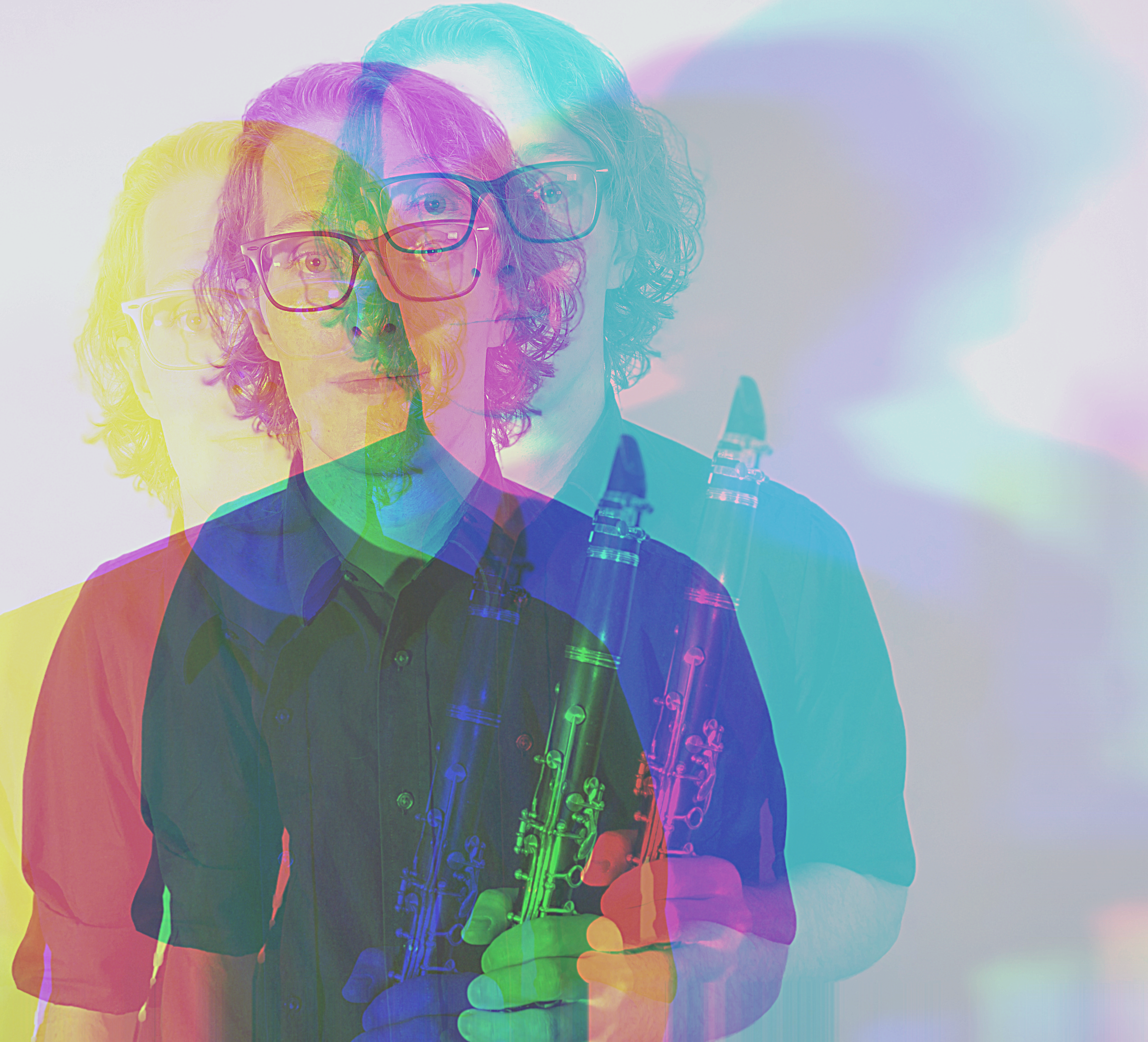
“. . . We’re all using these different perspectives and ways of looking at the same effects and electronics. I use Ableton, Erich uses ProTools and a wide variety of other softwares—but we’re all coming into the same types of effects . . . in ways that work together.”
Ford Fourqurean
It’s four different ways of looking at a lot of these same techniques. I think it gives each of these pieces a different character, but by the end of the album, you start to hear it as a coherent unit. In some ways, I feel like there’s the argument to be made that they’re distinct pieces, obviously, but I do think that as a listening experience, it ties together because of the techniques—maybe not the thematic material. You know?
Yes—in fact, that touches on another question I had, which was: Are the four tracks that make up the album tied together by any particular unifying – or contrasting – elements? So that’s really interesting to hear. We’ve talked about “Grotesquerie No. 2” and “Like Horses.” How about “aperture” and “divergent roads”?
FF: Those two pieces are two very different styles of composing, and two very different notations. “aperture” was the first piece I started writing, in the fall. Originally I think it was a slightly different piece before I got the first samples and revisions from Erich.
I started out with this sort of pop-y, Reich counterpoint-esque piece. I really like the effect of this really short articulation on guitar, and I thought, “Whoa—this is a really cool, punchy sound.” But after working with Erich and layering out these samples in Ableton, I found some really interesting chiptune synths that I felt worked really well with the guitar improv that Erich was doing towards the end. I asked Erich to revise the type of timbre he was working on and re-record.
The piece has two pages of notated samples and cells to work from. There were about four different layers of recomposing the piece from beginning to end that changed the tone and the timbre from something that was originally a light and fun listen, to something that I think is a bit more . . . I don’t know—Erich help me out here, I’m trying to think of the word for my own music [laughs].
EB: That’s actually really funny, because when I first started working on it, it sounded like it was in a form where it was cell-based and there was a lot of editing it around—it was a lot more carefree. It’s so funny how that flipped. At first I had these really heavy pieces, and you hadn’t started the duo yet. We were working on the solo and it was a lot more upbeat—and then it totally flipped on itself. So It’s really funny how it worked out. I never really realized that.
I think “positive”? Is that the word? It used to be more positive, and now it’s a bit more realistic.
FF: That’s a good way to put it. It’s not a programmatic piece, whatsoever. It sort of exists on its own. I’ve been trying to come up with a video for it forever, but I can’t think of what I would want to do with it—whereas, “divergent roads” started as five or six different chunks of video material that I put together. I actually made the video before writing any of the music down.
I went on two trips during the pandemic to visit national parks, [including] a trip to the middle of Maine, to Acadia, during the summer. After being stuck in Brooklyn for the past nine months-plus, these moments of going somewhere were freeing. But at the same time, there’s a difficulty in enjoying the trip and where you’re at because of the fact that you’re still locked down in the middle of a pandemic. This is not a pandemic piece, but I thought there’s something really beautiful about this experience of going forward and getting to be at a place where you are in the open air.
The way I composed it was I came up with multiple layered videos. The score is overlaid on top of the video. I played off of this and then sent it to Erich in video form.
Did you record the clarinet part after putting together the visual elements in the score?
FF: Yeah. It went: visuals, clarinet part, and electronics somewhere in between those two things. Then, I sent it over to Erich with the final layered score. Erich recorded back for me and I took different elements of the takes he sent to me and layered them in, and then processed them.
“. . . There’s literally no way to replicate this once again. But the beauty of it is, we have the automations in Ableton, so you could play this live and it would be a completely different experience, but you’d get the same effects, the same sound world, and the same overall experience.”
So, there’s literally no way to replicate this once again. But the beauty of it is, we have the automations in Ableton, so you could play this live and it would be a completely different experience, but you’d get the same effects, the same sound world, and the same overall experience. And for me, I want to be able to bring projections into the concert hall whenever I’m playing this. I think it’s also really cool working with the MUGIC. Even if you’re not manipulating sounds, you can manipulate video. Hopefully in the future I can incorporate more visual processing through the MUGIC, when I can go back and start revising more and more of my solo works.
That’s so cool. Would you briefly explain how the score’s material is intended to be interpreted through the information that’s included visually?
FF: It’s very loose. It gives you different pitches to move between at different points, starting with slower, longer material. Eventually you start getting more melodic material peering in, but it’s really up to the performer. Erich is comfortable working completely on the fly and is a very good improviser, so I knew I could trust him to get the sorts of sounds that I wanted to pull out.
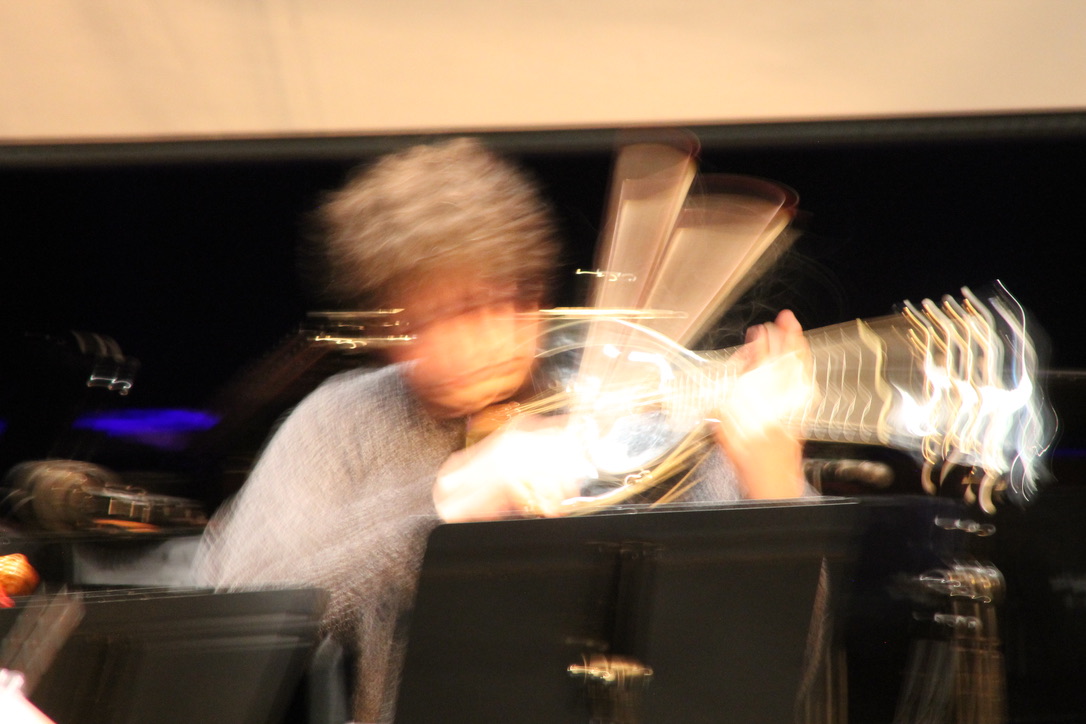
Erich, would you describe some of the specific ways in which you interpreted the material?
EB: It was a back and forth for at least a few revisions. At first, I was responding to the video on an electric guitar. Afterward, it was decided it would sound better on a violin. I got the pitch material and tried it a few different ways. There are no directions like sul tasto or sul ponticello written into it, and there are some moments that were explicitly stated: these need to be more legato-sounding, these need to be played more with texture here, for example. I had a lot of room to move around and interpret that. I sent over two or three different takes, and sent over one more afterward where I played a lot more legato.
“It’s closer to pop music production, where you take the best from every single session, you put it together, and you make a great product from that. And it feels a lot more alive because of that. So I really enjoyed the way that Ford composed it by piecing it together in the mixing stage. I think that’s why that piece really works.”
I like the production of the final version a lot because it is not typical of art music in North America. It’s not like you play and record what’s on the page. It’s closer to pop music production, where you take the best from every single session, you put it together, and you make a great product from that. And it feels a lot more alive because of that. So I really enjoyed the way that Ford composed it by piecing it together In the mixing stage. I think that’s why that piece really works.
And Ford, what is it that interests you most about using video projection as a starting point in composition?
FF: I’ve always been someone who needs to have a very strong outside visual reference. Some people rely on poetry, some people rely on synesthesia or colors. For me, I’ve been lucky enough to see some really incredible things and capture them on film. And being able to translate that and produce sound out of that is really easy. I can think of what the texture and the sound world would be, or at least what I would want that to be. It’s a great starting point. From there, I can dive into more and more layers.
One interesting thing that I’ve been talking about in my composition lessons with Nirmali [Fenn] this year is this idea of the skin of sounds. Sound has a temperature to it, right? There’s this feeling of hot and cold—this sort of sensitivity to textures. And what makes a sound cold or hot? What gives it this density? Why would you describe a sound as warm? And that’s the skin of it. That’s something that I’ve been trying to figure out in my own works: how do I create these temperatures?
“And what makes a sound cold or hot? What gives it this density? Why would you describe a sound as warm? . . . That’s something that I’ve been trying to figure out in my own works: how do I create these temperatures?”
Did the mixing and production aspects of creating the EP’s recordings come in early on in the composition process?
EB: I think one thing that’s unique to this project, at least from my angle, is that these tracks only came together in the mixing process. It seems like a lot of the ways that these came together was I gave Ford the tracks that I recorded and he put them together in the mixing. In the same way, in the first track, Ford gave me about two different takes, and I reprocessed them through this device called a Kaossillator to go and recreate that. In the mix, it actually became the real piece. The only thing that has a traditional kind of score that you would expect is the Grotesquerie piece. Everything else was created in the mix. So that was actually a very integral part to this EP, I think.
Very cool. How about the EP’s name?
FF: Well, we go through these different ways of looking at things, right? Each track is our own perspective on this, so I figured “Iris” is this flexible lens.
One more musical aspect I was interested in hearing more about is the electronics that conclude the ends of Tracks 1 and 4. It sounds as though the instrumental playing morphs, and electronic sound takes over in some way.
EB: One reason that worked was because of the nature of the improv that went into this. The mixing stage was the final say with how the composition went. I think that does inspire the way that I would interpret this if we were to play this live at some point.
FF: For the last track, I used this mixture of processed synth sounds. I dive into this recorded white-noise, sort of static-y, texture. I don’t know if it’s super, super audible, but at certain moments you start to hear little bits of a heartbeat. Towards the end there, it’s this idea of fading away and fading into static. And for me, letting us die out and letting the static, light, and the visual element of that take over, was important for me.
Is there anything more you’d like to share?
FF: One thing I want to highlight is just how weird and how fun this entire process has been. Sometimes I feel like we try to intellectualize these projects and everything has to be some form of high art, right? But some of the greatest collaborations – and some of the greatest work going on right now – is by people who are operating outside of high art spheres, or who have not been given the privilege of being in high art spheres. Collaborations, for me at least, started out as something that I felt like I had to do to get through the pandemic, but now they have turned into something more enjoyable where I get to work with people that I would not have otherwise.
EB: And in addition to that, the amount of support that has been added to that entire sentiment is kind of a movement, more or less. The label that we’re releasing this on – Off Latch – their entire ethos is that D.I.Y. dedication to letting artists who might not have a platform find a place to go and host their art—whether it’s in the form of an album release, or written short stories, long essays, et cetera. I think it’s really, really incredible that we get to go and also contribute to that community through this project, as well. It’s something that I hope it will continue long after the pandemic’s over. It’s so democratizing and it’s a very unique place to be that I think is, like Ford said, very under-recognized.
Check out Iris, the new EP, available here.
To read more about Ford Fourqurean and Erich Barganier’s music, visit:
www.fordfourqurean.com and www.barganiermusic.com.
 the Classicyl Vine